Stories
Penguin Composites
Postcard perfect…. with Igloos.
Penguin is well known for one thing: it is one of Australia’s most visited seaside villages, and one of the most popular places on the coast to actually live. Oh yes, and it has the big Penguin – the most photographed Penguin in the country. What is far less known is what happens up the hill behind the main town.
In a row of weatherworn 1970s sheds, around 35 people are quietly building things for Antarctica, Hollywood and the Australian Army. Often in the same week. Penguin Composites is one of several thriving manufacturing businesses operating out of sight of the visitors who come for the beach.
Penguin Composites has been here since 1976. It began as a fibreglass workshop and has grown into one of Tasmania’s most versatile composite manufacturers, equally at home turning out a caravan panel on Monday and a defence-grade component on Tuesday.
The Other Stuff in the Shed
Most days, the work at Penguin Composites is reassuringly ordinary. Caravan panels. Boat hulls. Bus parts. Mining components for clients like Grange Resources. It is steady work, skilled manufacturing, built on decades of hands-on expertise in resin, fibreglass and carbon fibre.
Then you turn a corner and find a water slide. Or a portable toilet. Nobody on the factory floor seems to think this strange. After fifty years, the unusual has simply become part of the job.
Apple Huts and Ikea Logic
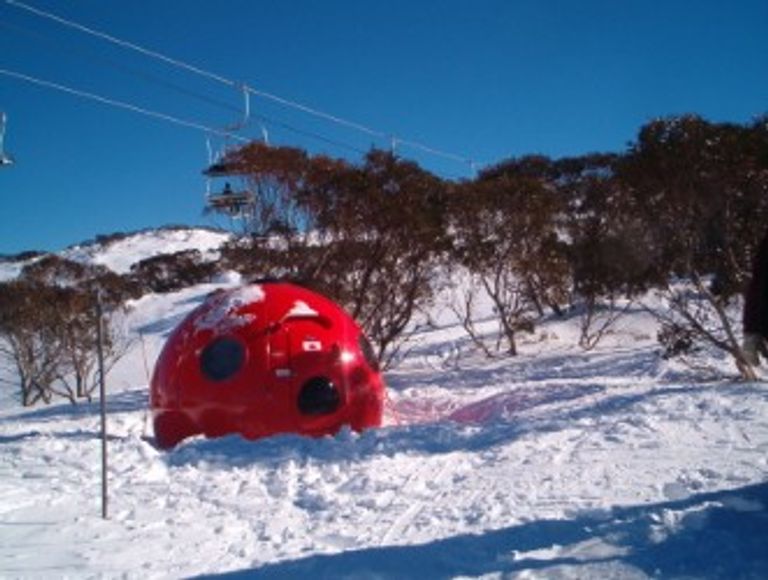
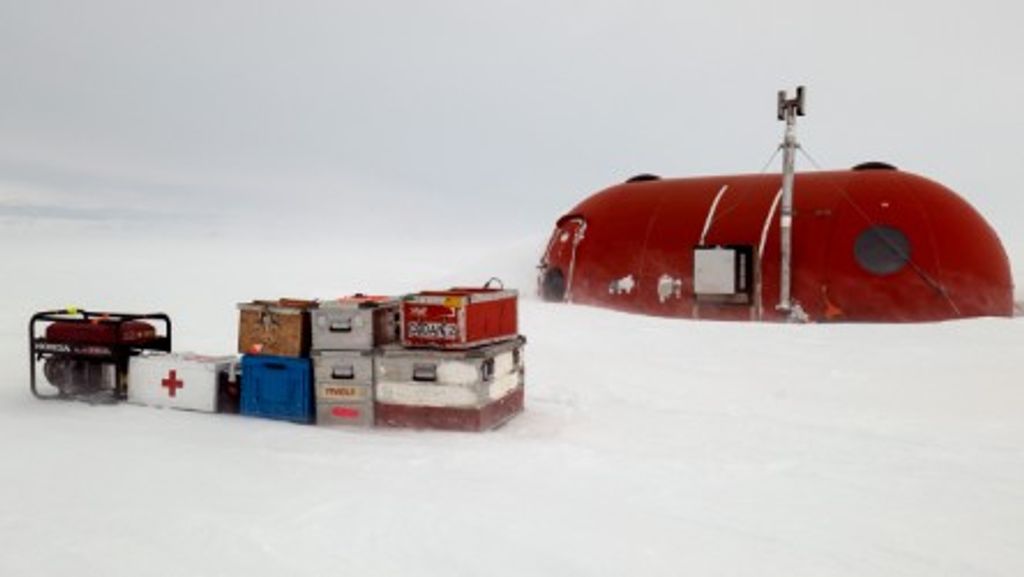
The company’s most famous product started as one local designer’s idea in the 1970s. Malcolm Wallhead invented a fibreglass dome built from wedge-shaped panels, not unlike slicing a fruitcake into segments and standing it on end. The Australian Antarctic Division liked it enough to start ordering them, and never really stopped. They call them apple huts. Officially they sleep two or three people. In an emergency, they will squeeze in fifteen.
The clever part is that each dome flat-packs into pieces light enough to move and simple enough to assemble without instructions. No Allen key required. Penguin Composites has shipped them to research stations across Antarctica and to places as far-flung as the Cocos Islands, Switzerland, Greenland and the United States. Google ordered a set, in bright colours for its Zurich office. Penguin Composites’ little igloo then became a Hollywood star in the US film “Yesterday Island”.
Malcolm Wallhead has since passed away. The design now belongs to his widow, Anthea and the manufacturing still happens in the same Penguin sheds where it always has.
Built to Keep a Secret
It turns out a company that is comfortable not talking about things, is useful to a lot of people. Penguin Composites has already completed one military project in the Thales Hawkei. They now supply multiple Defence companies with items such as bonnets, side steps, mud guard and fuel tanks.
The parts are baked at high temperatures over extended periods so they can survive conditions most manufacturers never have to plan for. What exactly they do stays confidential. How well they do it does not.
Penguin Composites is proof that “made in Tasmania” and “told to keep it quiet” can be the same sentence.
What Chris Clarke Sees Next
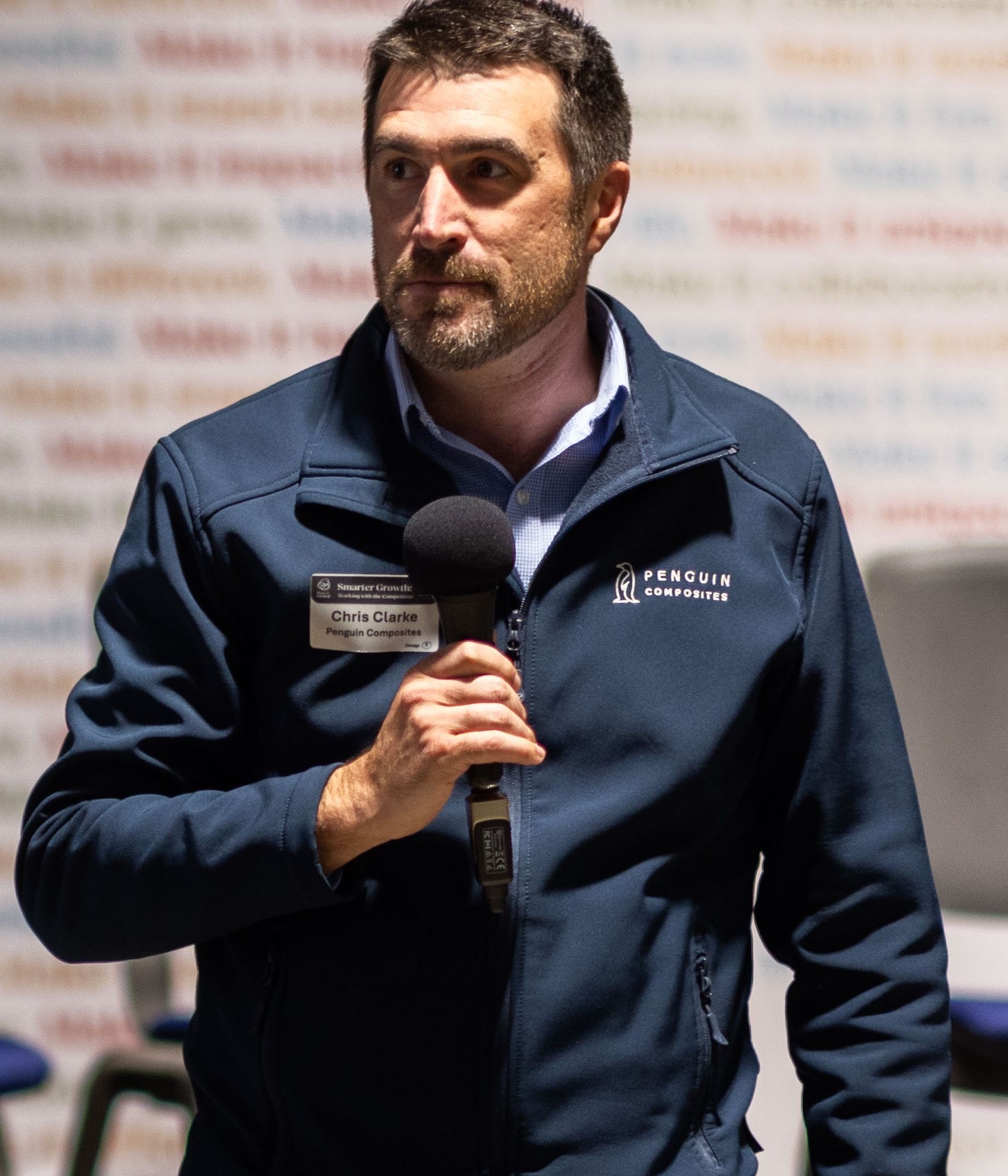
Managing Director, Chris Clarke is solidly embedded in the business, and just as firmly committed to a great future. He talks about the workshop the way some people talk about an unfinished sentence, full of capacity and capability, waiting for the next chapter.
His sights are set on an industry the company has not built for yet, but believes it is ready for – the wind energy industry projects that are springing up across Tasmania.
“We want to collaborate with the wind industry onshore to work in this industry. The blades are all made of composites. We already complete repair work at Glanville Harbour for Vestas.
We have a clear growth pathway. With the necessary site and capacity expansion on our land, building upon the skills and experience we already have in abundance, our company could achieve the necessary economies of scale to compete with overseas manufacturers and add approximately 80 to 100 jobs in an expanded facility that could be right here in Penguin.
We already export mining parts to Thailand. We have the plan, and we have partners. Now we need collaboration and coordination from government. This will be economic gold for the region and for Tasmania. Why continue to pay rising wage and freight costs importing these parts, when we have the capability to build them right here?”
— Chris Clarke, Penguin Composites
Behind the Postcard
No single contract makes this story. The range does. Few manufacturers move between Antarctic infrastructure, defence supply chains, film production and everyday recreational vehicles without missing a step, and fewer still do it from behind one of the country’s most visited seaside villages, with a workforce trained up locally over close to half a century.
That is the part worth noticing. Penguin’s reputation as a place to visit, and to live, is well earned, but it is only half the story. Up behind the main village, alongside several other businesses most visitors will never know are there, Penguin Composites has spent fifty years building a reputation of its own: trusted with work that demands precision, discretion and staying power, made in a seaside village and shipped to places its makers will likely never see it land.
What it does not yet have is room to grow into the next fifty years. The plan is there. The partners are there. What is missing is the collaboration to match, the kind that turns a workshop with a waiting list, into a workshop with the floor space to say yes.
Penguin Composites is a business destined for well-deserved success.
Sourced from Penguin Composites company materials and reporting by the ABC (Meg Powell, 16 August 2023). Reworked and reframed for Make it Central; no original text reproduced.